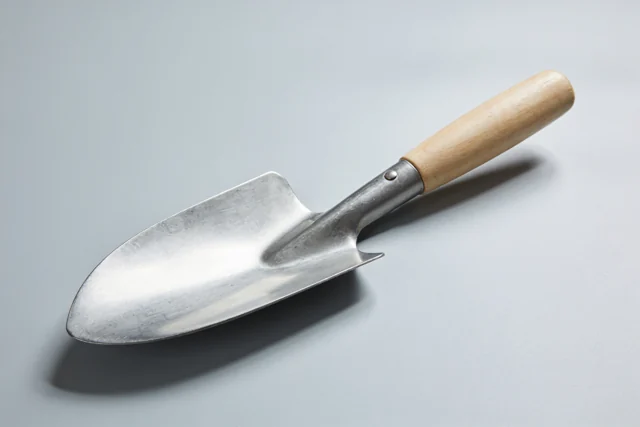
Set the pot on a stable surface and check its drainage. Work loose potting mix with a broad trowel rather than forcing a narrow blade to carry a large scoop. Leave room at the rim for watering and space the plant according to its own needs.
For an existing pot with neighboring plants, a narrow transplanter opens a more controlled slot. Support the root ball; do not lever against the pot edge. A dibber makes plug holes in already prepared mix, but planting depth depends on the plant, not the length of the point.
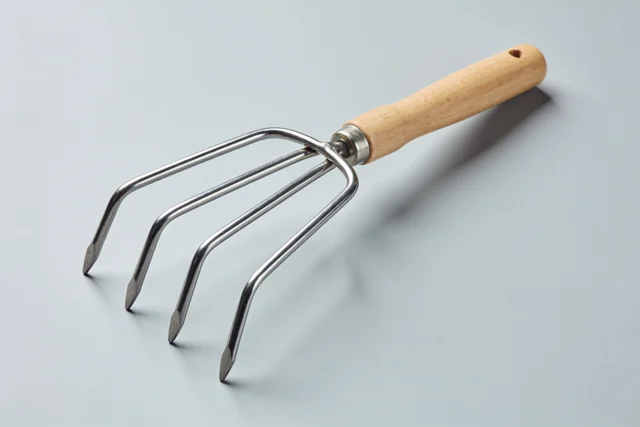
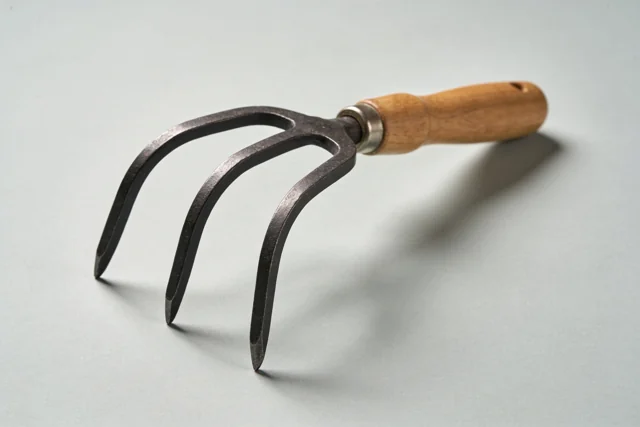
Check where roots, irrigation and buried services are before disturbing soil. A hand fork lifts and opens the top layer in workable soil. A curved cultivator rakes the surface; neither is a stone lever. If the ground is frozen or hard, stop rather than forcing a small handle.
Draw a shallow row with the flat hand hoe, then set spacing and depth for what you plant. Work around established roots. For a single unwanted root, the fork-tip weeder reaches beside it with less disturbance than cultivating a whole bed.
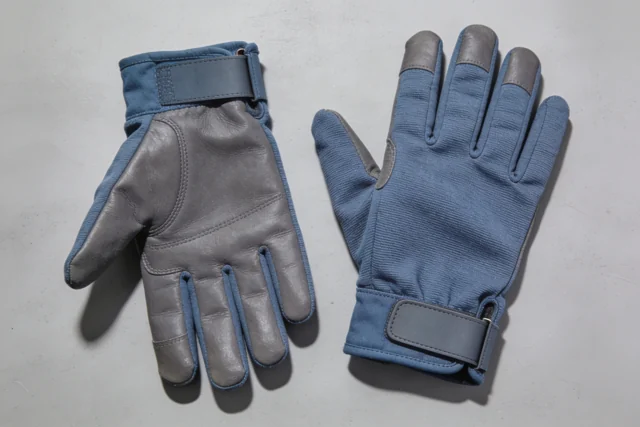
Measure your palm without the thumb: approximate S 6.5–7.5 in, M 7.5–8.5 in, L 8.5–9.5 in. Flex the fingers. A glove should stay in place without pinching. Ask before acceptance if you fall between bands.
Short knit cuffs suit light potting. A long cuff adds coverage around soft foliage, but no glove here is certified for thorns, cuts, chemicals or heat. A coated palm does not make an entire knit-back glove waterproof.
Brush off loose soil while it is easy to remove. Rinse metal only as needed and dry it promptly, especially joints and the spaces between tines. Wipe wood instead of soaking it. A small tool should never be put away wet in a closed bag.
Follow each glove’s care instructions: woven or knit pairs can be gently hand washed, while leather parts are better brushed or spot-cleaned. Open cuffs, let everything dry and inspect seams, handles and edges next time. Store sharp points and blades safely away from children.